Tuesday, January 29, 2013

College Student Technology Survey - Fall 2012


Over the past year I changed institutions. After many years as the CIO at Salisbury University in Maryland I moved the same position at The College of New Jersey (TCNJ). Both are great schools, but have a different feel. Salisbury has about 8,700 students (7,900 UG) and TCNJ is slightly smaller at about 7,400. There is a clear emphasis on the undergraduate (6,500 UG) experience at TCNJ although it has some graduate programs. Salisbury is more of a comprehensive with many more graduate programs. TCNJ is more selective and largely residential, but the schools come from the same “teachers college” roots.

I could not wait to survey the students at TCNJ. In December 2012, I sent out a web survey and was able to get 816 responses in three days. I did not do a follow-up request. In the past I have found that 800 students give you a pretty good sample to identify trends.

Here are the interesting observations for fall 2012 at TCNJ:

Of 816 students surveyed all but one student owns a computer. Computer ownership is no longer even a consideration at TCNJ. Virtually students own a laptop and about 25% also own a desktop computer. We also found that about 17% own tablets. Multiple computers have hit this campus. That said, TCNJ still operates many computer labs, as most campuses do. Teaching in a computer lab is desirable in many disciplines and many disciplines and students take advantage of institutionally purchased specialty software. Just for the record, 42% of the TCNJ students own MACs and about 60% work on PC laptops. This seems to be a growing trend, but is surprising at the over cost of higher education and the relative cost of a MAC over a PC.

Students still own portable music devices with 88% owning either an Apple iPod or an iPod touch. E-readers owned by 19% of the students and 47% own game consoles. TCNJ does not offer free printing in labs and the library so 67% of students own personal printers. BTW, 74% of students are TCNJ own televisions. I was a little surprised by that since I was starting to think that the video demand of Netflix and Hulu would start bringing this number down.

In the cell phone space 809 of 811 respondents own cell phones. Smart phones are owned by 77%. This has grown rapidly. When I asked the same question in 2008 at Salisbury smart phone ownership was at 5%. At TCNJ, 50% of the students own iPhones, 22% own Android phones and only 3% own blackberries. Windows Smart phones came in at only 1%.

TCNJ went with the Google free email and apps option for students a few years back. I was surprised to see that 87% of the students are using Google Apps. Where is Microsoft office – in the labs. The TCNJ students are pretty great at checking their email. The survey suggested that 95% check their email daily and 99% check it at least 2-3 times a week. This is quite a bit higher than I have seen in recent years. Many college administrators will tell you that students never check their email. This is not rue at TCNJ.

One last observation for this installment. Students are still the target of the RIAA and the MPAA for illegal downloading of music and films. At TCNJ 59% of students say they never illegally download entertainment content and only 11% say that they do it often. These may not seem like good numbers, but they are not bad at all.

Next time I will look at the “write in IT suggestions” of TCNJ students.

Thursday, December 20, 2012

The Cloud and Colleges: Are we there yet?


Well Christmas is almost over and my holiday blog is so last month. Time to look ahead to 2013. I am thinking about mobile, BYOD, security, a decent reporting solution (that I can afford), and the cloud (not Saas).

I attended Educuase last month and made sure to see Casey Green's session on the Campus Computing Survey . I always enjoy seeing what Casey has come up and comparing it to the ECAR study produced by Educause. The Core Data Survey provides some pretty good metrics for comparion on all sorts of issues.

There are many things to look at this year, but I was struck by the low numbers associated with cloud computing in higher education. In late September I made my first trip to Oracle World in San Francisco and heard Larry Ellison talk almost totally about cloud computing and how his products (almost every product you can think of) will serve us in the cloud. Well he said "your cloud, the Oracle cloud or a cloud hybrid", not just the cloud. A cloud hybrid is a little of yours and a little of his. this was a new term for me. He must have heard that most of higher education and business is just not quite ready to give of their data and their customizations for a single cloud flavor of their ERP system.

For a moment try and imagine that you a CIO who is looking hard at the cloud as the future resting place for all computing. We can see the benefits of smaller or no data center; fewer database administrators, if any; and a disaster recovery plan that is clearly "Larry's problem". This is where we all want to be, but the message from most big providers is that all you have to do is run "vanilla". All customers use the same software and pretty much follow the same business practices. What a concept.

I do not intend to mock the cloud as a concept. It probably is where we will all go some day. In the real world we all have those things that make us just a little bit different. In higher education we generally think that these differences are not problems, but are part of our identity or features. Our way is in fact the right way and is a reflection of who we are. Obviously, this cannot be compromised and we need find a way to incorporate our uniqueness into the systems we run.

So, back to Larry's idea of "your cloud, the oracle cloud, and the hybrid cloud". I think he means that we could run part of our major systems (ERP) on the campus and part on his cloud at the same time. This is facinating, but hard to get your head around. Back to the Campus Computing Survey , in 2011 it showed that about 4% of colleges were putting their critical business systems in the cloud. In 2012 this jumped to 6%. This is a 50% increase in one year, but looks like a slow moving trend.

To date only email (75%) and and learning management systems (37%) are moving to the cloud (GRCC, blog on CCS 2012 results). On the email front most of this is student email with Google and Microsoft offering free products. Low risk, since its only student information. I have dipped my toe in the water with smaller systems like medical records, judicial records, and student job services. I am uncomfortable with all of these since I cannot help my users when they have issues. I also don't know where the data is or what happens if "company X" goes out of business. BTW, we are trying to move away from one cloud vendor and they want to charge us for our own data!

The Educause Top Ten Issues 2011 paper talks about cloud computing as a key strategic issue, but also provides questions about security and even the definition of cloud computing. So as we start 2013 maybe we can keep whacking away at the definiton of cloud computing; learning more about where the data is and how secure it is;and determining how we can maintain all that is important to our campuses business processes while being "vanilla" in the cloud. More work needs to be done and more questions answered before many colleges adopt cloud computing models.

My advice is to focus on what you can control and achieve in 2013. Go for some lower hanging fruit like deploying mobile applications, encouraging/supporting the use of teaching technologies, staying focuses on security, and keeping the wireless services "always on" and seemingly open. The cloud discussions will continue. I don't think we are there yet.

Wednesday, November 28, 2012

Christmas and the college student 2012


Time for the annual gifts for college students blog. This is the third year for this topic and I have to say that it appears that most college students have everything they need. Of course this is never totally true. The tech wizards would never let that happen. You can look at my blogs for the past two years on this topic for more ideas, but here are a few new options.

In the past year or two I have become aware that I am adding a few extra pounds. Imagine. I think this is a universal feeling that even college students share with the rest of us, even though they are often blessed with a great metabolism. Well I had a birthday last month and my resourceful daughter new about my recent weight concern and bought me a FitBit ($99). This is the coolest thing if you have a touch of OCD. You wear or carry this little electronic device around and it monitors your activity level from walking to climbing steps. On the fitbit web site you can also add workout information, if you are extra active. It doesn't stop there. You can enter in the foods you eat noting calories from an extensive drop down dictionary of foods -- even restaurant foods. All of this tracks toward your personal weight loss goal. Whatever it might be. Its all about calories burned and calories consumed. Oh, you can also track your sleep patterns. There is also a mobile app available on iTunes if you want to use your phone to track you activities and other data. Very cool for the compulsive geek who wants to lose a few pounds. It also has a social networking piece if you want to share your progress and encourage others.

The other cool thing I am looking at is the Kindle Fire HD. This came on the market last year, but there are two sizes now, 7" ($199) and 8.9" ($299) display. I am looking at the larger one that competes directly with the iPad3 ($499). There are a few things that make it more attractive than the iPad. The price; the dual stereo speakers; and the USB input. I like the iPad, but this is hard to pass up. Its a great extra device with great power for the mobile college student. BTW, I would only buy the wifi version. Going with a 3G version just adds more monthly data costs. You probably already know that 3G is pretty slow.

Have you thought about electronic stocking suffers? You can use an iTunes gift card for apps and for music. Here are a couple of articles with lots of app ideas for college students:

US News: Five Apps College Sudents use this year

GeekSugar - 10 great apps for the college student

There are many neat apps on these lists. I like free WiFi finder. This notes where you are and where you can find WiFi in your immediate area. I use this when I travel. I also like Notability for taking notes and evernote for organizing activities. You can Google Apps for College Students and get even more ideas. These are often either free or offered at just a few dollars. Again, the iTunes gift card can cover these.

One last cool idea. The backpack that also charges your devices. You carry backup power with you. The Powerbag lets you charge your backpack and you then have power all day. You can also carry other stuff. It lists at a pricey $139 at the company site, but I suggest looking at Amazon or Groupon. I have seen it as low as $59.

Have a Merry Christmas!


Tuesday, September 11, 2012

Rapid progress of MOOCs. When will the business model be discovered?


I have been wondering how long it would take for an accredited college/university to grant college credit for free Massive Open Online Courses (MOOCs. That was last month. Colorado State has started to do it! In the recent Chronicle of higher Education article, A First for Udacity: a U.S. University Will Accept Transfer Credit for One of Its Courses, Colorado State took the step. It is their course offered through Udacity, but the implications are interesting. Typcally. colleges and universities in the US will accept college credit transferred from regionally accredited colleges and universties. CSU fits this criteria.

This should mean that almost any school in the US will also grant credit for the course(s) when transferred from CSU, or will they? I would guess that over the courseof this academic year many college curriculum or admissions committees will have to decide how they want to handle this.

"Some 94,000 students worldwide took the course when it first came online early this year, and 98,000 more signed up for the second class, which started in April. "We have students from well over 100 countries, from 13-year-olds to 80-year-olds, sharing in the experience," Mr. Evans (course instructor from UVA)said of the class, one of a growing number of massive open online courses, or MOOC's, that have been attracting national attention this year."

Once colleges deal with the transfer issue, they will have to think about creating their own policies for granting credit for MOOC courses. According to the Chronicle article "in order to earn the three transfer credits toward their bachelor's degrees at Colorado State, students will need a "certificate of accomplishment" from Udacity showing they passed the course. Then they have to pass a proctored examination offered by Udacity through a secure testing center. The exam, administered by the Pearson VUE testing group, will cost $89."

So Pearson is already stepping in to provide testing and assessment services. How different is this from the College Board or the Educational Testing service providing verification of accomplishment tests for high school advanced placement students. Not very different.

Time to ask more questions:

Does this mean that with the proper assessment from a respected assessment vendor or college that other colleges will accept the courses in transfer and grant credit?

Will traditional colleges limit the amount of MOOC credit that they are willing to accept toward a degree? Many do this with transfer credit now.

What does this mean for the student and the cost of a college degree? If students take as many MOOC courses as they can transfer to the school of their choice, how will this reduce the total cost of their college degree?

Will "for profit" colleges start granting degrees totally on the basis of MOOC classes (for a modest processing fee?

When will someone find a business model that makes MOOC courses viable on a large scale. Let's see, if "College X" charged $25 for a MOOC class and $75 for the "verification of learning exam" with 98,000 students in the class -- a single class could generate $9,800,000. Most of these students could transfer the credit to the school of their choice and apply it toward a degree.

Most colleges are still shaking their collective heads and writing the whole MOOC thing off. I am glad to see the Gates Foundation funding some research on MOOC courses. This will be good information for the education community to consume and use for even further discussion. I feel more committee meetings being called.

Monday, August 13, 2012

What in the world is a MOOC and what does it mean to higher education?

A MOOC is a Massive Open Online Course."A massive open online course (MOOC) is a category of online course where the participants are distributed and course materials also are dispersed across the web. MOOCs are a very recent variant of online education, which itself is a form of distance education." Wikipedia . MOOC's are free courses offered by some of the best schools in the world and by the best professors. If you have an internet connection, you can take a course. The technology used is available at reasonable prices to any college, not just the elite. Some are already using tools like learning management systems and class video technology with their own students, in regular courses. This content is most often strongly protected behind a userid and password.

This has been a topic of interest to those who think about the future of education and teaching, and the growth of advanced learning around the world. Stanford, Princeton, MIT, the University of Michigan, the University of Pennsylvania are some of the early players. They are providing free on-line courses to the world. Coursera, MITx and a few other organizations are the delivery systems.

You can Google and get lots of information about MOOC's. I visited the Coursera site last night and found that they offer 117 courses in 16 content areas, for free. This is a limited number of courses and it does not look like the courses lead towards a degree -- yet, but what an opportunity. When you look at this list of courses and the schools that are offering them you have to come back to other questions that are abuzz in higherd education these days:

Does a degree mean anything anymore?
What are college students learning in college?
Is a college degree worth all of that money?
Is the four year residential college seeing its last days?
Will this greatly empower those living in remote areas of the world and what does that mean?
Will the 3rd world leap over the west?
Will this find its way to K-12 and make home schooling the preferred method for many more families? (See the Kahn Academy, if you think this is far off.)
Will college students assemble a group of MOOC classes, a few regular on-line classes, and in person classes and earn a degree?

I might revisit these questions over the next few months, but more importantly I think all colleges and universities need to consider them themselves. We are always developing or refining strategic plans, planning for regional accreditation, or trying to think of how our campus can be "distinctive". With all due respect to my colleagues, most have their head in the sand over this topic. Many consider it to be just another game for the rich schools. I am pleased that the term "blended courses" has almost become mainstream on many campuses, but this is just the start. The cost of education and the market place will decide whether the product we have been providing for decades is still going to hold up. I am a great advocate of the traditonal baccalaureate experience, but its day may have come and gone. I urge every college president to learn what MOOC is and to start a discussion on their campus.

Will a degree from Western Governors University, the University of Phoenix, or the University of Maryland University College be as valuable as those from other schools? They already are!

BTW, last night I signed up for a course entitled "Information Security and Risk Management in Context" offered by the University of Washington.


Thursday, August 9, 2012

Fall 2012 Technology for the College Student

Its time to start another year on college campuses. Colleges have become so rich with technology over the past few years that you would think that students have everything they need. Of course, enough is never quite enough. There are still some basics that most students seem to want , or need, for their very own. I am from the hot pot, telephone, and refrigerator generation. Colleges don't allow hot pots anymore. The fridge and the microwave are still staples. I thought the need for a TV might die off, but not yet. Most students still have a TV in their rooms. Many campuses are moving to all digital TV services with HD channels. At my last post we offered 100 channels, including 15 HD channels. Of course Netflix and Hulu on the laptop are gaining fast.

Here is my list of digital staples for the fall of 2012:

Logitech wireless keyboard and mouse. Who wants to write a paper on a laptop keyboard when you can turn your laptop into a desktop for less that $50.

Audio speaker system. I have talked about these before, but now there are so many choices and price points. Why not turn your laptop into a powerful sound system for moveies or music. Here is a comparision of a few products that run from the fairly cheap to the pricey. You have to decide how far you need to go. If you like the more traditional three speaker option (pretty good, for cheap) check this one.

Decent ear buds or headphones. Here again beauty is in the ears of the beholder. There are choices to be made, but even the cheap ear buds or headphones would probably be adequate. there are plenty of places on campus (the gym, library, dining hall, computer labs...) where you have to keep your music to yourself. Keep in mind that these are often lost or misplaced, so I would not invest too much. Update: I just bought some nice sounding ear buds at Five Below for $4.99!

Small LED TV. As noted above, TV is still alive and well and most campuses are going digital to offer many channels and HD services. Most students still bring a TV to campus. I think the 24" or 32" are generally adequate, but sports intense students might disagree. I have seen 50" LCDs on campus. Yes the rooms are still pretty small, so imagine the dominance of the big units. I like the new LED models for a sharper picture and lighter weight. The prices on these have come way down.

IPhone apps for free. In the past few years we have seen the number of Smart phones jump on campuses. The numbers stand at 70% on most campues now. The Smart phone is the new laptop. Well sort of. IPhone has the dominant position in the space at the moment, so I found this list of free apps for the iPhone connected college student. Most of these are not toys or games. They are cool useful tools and they are FREE.

So this is my short list for this fall. If you can think of more, please comment.

Thursday, July 12, 2012

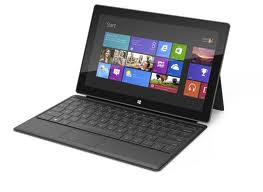
The Surface tablet by Microsoft


This is an amazing new entry device that will be entering into the tablet space. It could give the iPad a run for it's money. Price and the success of Windows 8 will make all the difference. Here is a guest post from Jeddel Yeras from The College of New Jersey (with permission).

Microsoft Surface

Break on through... Surface. Last month the Redmond Giant, Microsoft, announced some details for its upcoming tablet offering called "Surface" and set the media in a frenzy of speculation as to whether this could be the long waited for "iPad Killer". Don't get me wrong, I've enjoyed Apple's products as much as the next guy, but frankly, I've grown somewhat tired of their market dominance and arrogance. Yes, the iPad is an excellent piece of hardware and there is no argument that iOS offers a plethora of applications. But do you really need that many apps? Is the iPad truly a versatile system that can revolutionize the computing industry and replace the PC? Arguably No. Microsoft has been patiently studying the market and analyzing its competition. The shortcomings of Android, and the success of Apple as well. It's response is what I would consider a truly "next generation" device that incorporates the option for both tablet as well as PC. Yep... You heard right. A tablet that can actually replace a notebook PC. Microsoft Surface will be offered in two variants a slimmed down version for the more "tablet-oriented" consumer dubbed "Surface RT" (code for "runtime") and a full featured version dubbed "Surface Pro" which will run the Windows 8 Pro Operating System. Pricing information is sketchy and rumors have a price range of $599-$999 but this is purely speculative as no formal announcement has been made by Microsoft on pricing structure for the much anticipated device.

I personally do not own a tablet. I've played around with borrowed iPad's and didn't even bother to touch an Android tablet. I found the concept of a tablet interesting, but the functionality just wasn't there. They just seem like an overpriced electronic toy. Microsoft Surface, on the other hand, caught my interest. These machines will run Windows 8, carry a ClearType 10.6" HD display, configurable with up to 128GB of memory, runs Office Apps, and comes with a built-in keyboard that folds to a screen cover? I smell a winner! The perfect synergy of productivity and portability without skimping on the fun factor. Now this is a product that I would strongly consider investing in. Another unique aspect for this device, which strays from anything Microsoft has done in the past, is that the hardware and the software is all Microsoft. Whether that's a good thing or a bad thing is still to be determined, but it's a bold move by the company who previously was only interested in software distribution, leaving vendors to handle the hardware aspect.

The value in a device such as this is broad for any consumer. Students would have portability and accessibility to familiar applications such as Office. Business users would be able to seamlessly integrate to corporate systems and possibly even run business applications compatible with Windows 8. If I could have a portable machine like this, weighing at just a hair over 2lbs, that runs all of my essential Microsoft apps AND plays Call of Duty??? Well, I'm sold